
Birds of the Gulf Coast
Discover the hidden gem of birdwatching along the Gulf Coast — where turquoise waters and diverse wildlife provide the ideal setting for your next outdoor excursion! Learn more about some of the Gulf Coast birds you’ll see on your next vacation.
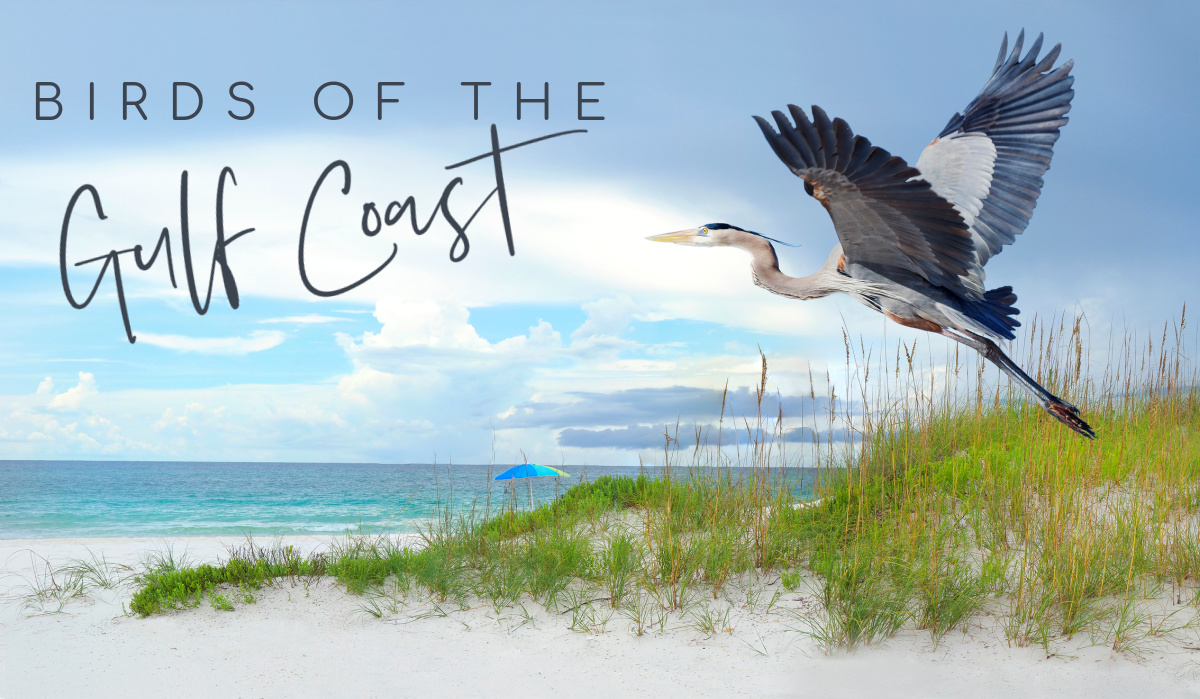
The Gulf Coast is renowned for its stunning emerald-blue surf, pristine beaches, endless sunshine, and warm temperatures that draw vacationers back year after year. With gentle ocean breezes and an abundance of fresh seafood, fishing, boating, and water sports, it’s no wonder that visitors flock to this picturesque paradise time and again.
But beyond the sun-soaked shores and thrilling water activities lies another captivating attraction that often goes unnoticed, yet is worthy of a top spot on any travel itinerary: birdwatching.
Imagine witnessing the grace of Gulf Coast birds as they soar effortlessly over the waves, plunge into the surf, forage in shallow waters, dance across the sand, or fill the air with their unique calls. Each avian species offers a rich tapestry of vibrant colors, distinct songs, nesting habits, and dietary preferences.
The Gulf Coast is home to two main groups of birds: permanent residents and migratory visitors. This means not only do many species reside along the coast year-round, but also that over 300 migratory species pass through twice each year, adding to the region’s avian diversity.
Among the more common permanent residents, you’ll find the striking eastern brown pelicans, graceful gulls, majestic bald eagles, elegant great blue herons, and energetic ospreys, as well as least terns, egrets, double-breasted cormorants, anhingas, roseate spoonbills, white ibises, black skimmers, rock pigeons, and so many more. Each encounter is a reminder of the vibrant wildlife that enriches the Gulf Coast experience.
Majestic and Iconic: The Eastern Brown Pelican – A Coastal Wonder
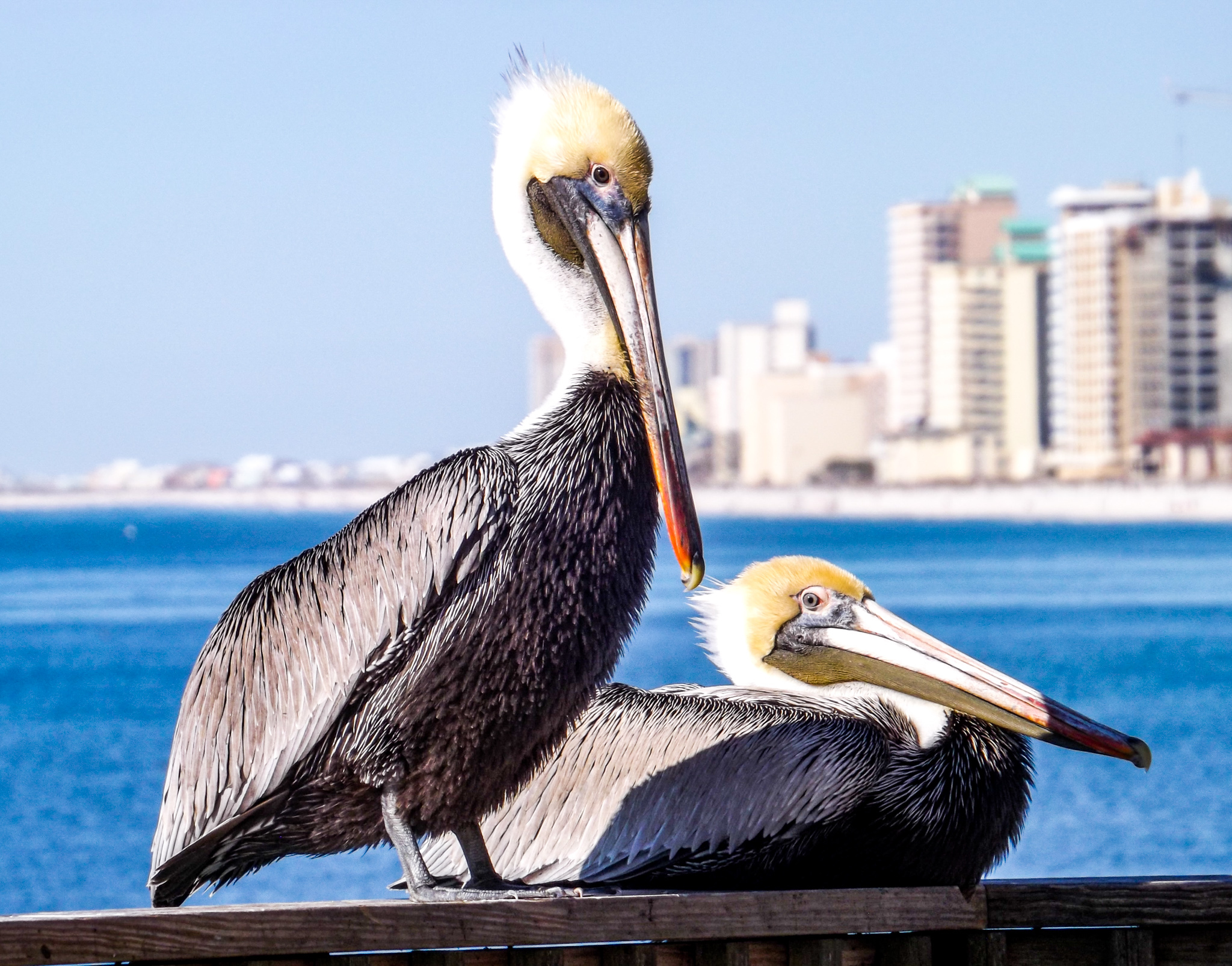
A common bird along the coast is the eastern brown pelican. Once listed as an endangered species, this version of pelican has returned to safe numbers and is thriving. They are smaller than most other pelicans, with adults weighing about eight pounds, body lengths measuring up-to four feet, and wingspans of up-to six-and-a-half feet. Adults are easily recognizable with gray-brown bodies, tall white necks, light-yellow crowns, and long slender gray, brown or orange bills.
If you’ve seen a goose-sized gray-brownish bird plunging headfirst into the surf and arising with its bill pouch stretched full of fish, chances are you were watching an eastern brown pelican. They eat herring, minnows, sheepshead, and other fish, as well as invertebrates and sea crustaceans, consuming up to four pounds daily. They can spot fish from 60 feet away, and plunge into the water at up to 40 miles per hour.
Flocks fly in tandem lines, beating their powerful wings deeply and slowly, then sometimes gliding, and surfing updrafts. They live and nest in colonies and often mate for life. Eastern brown pelicans are not very vocal, although they do emit low, hoarse sounds during wing-jerking displays, and pop their bills loudly when defending their nests.
Meet the Laughing Gull: The Cheerful Coastal Bird of the Gulf Coast

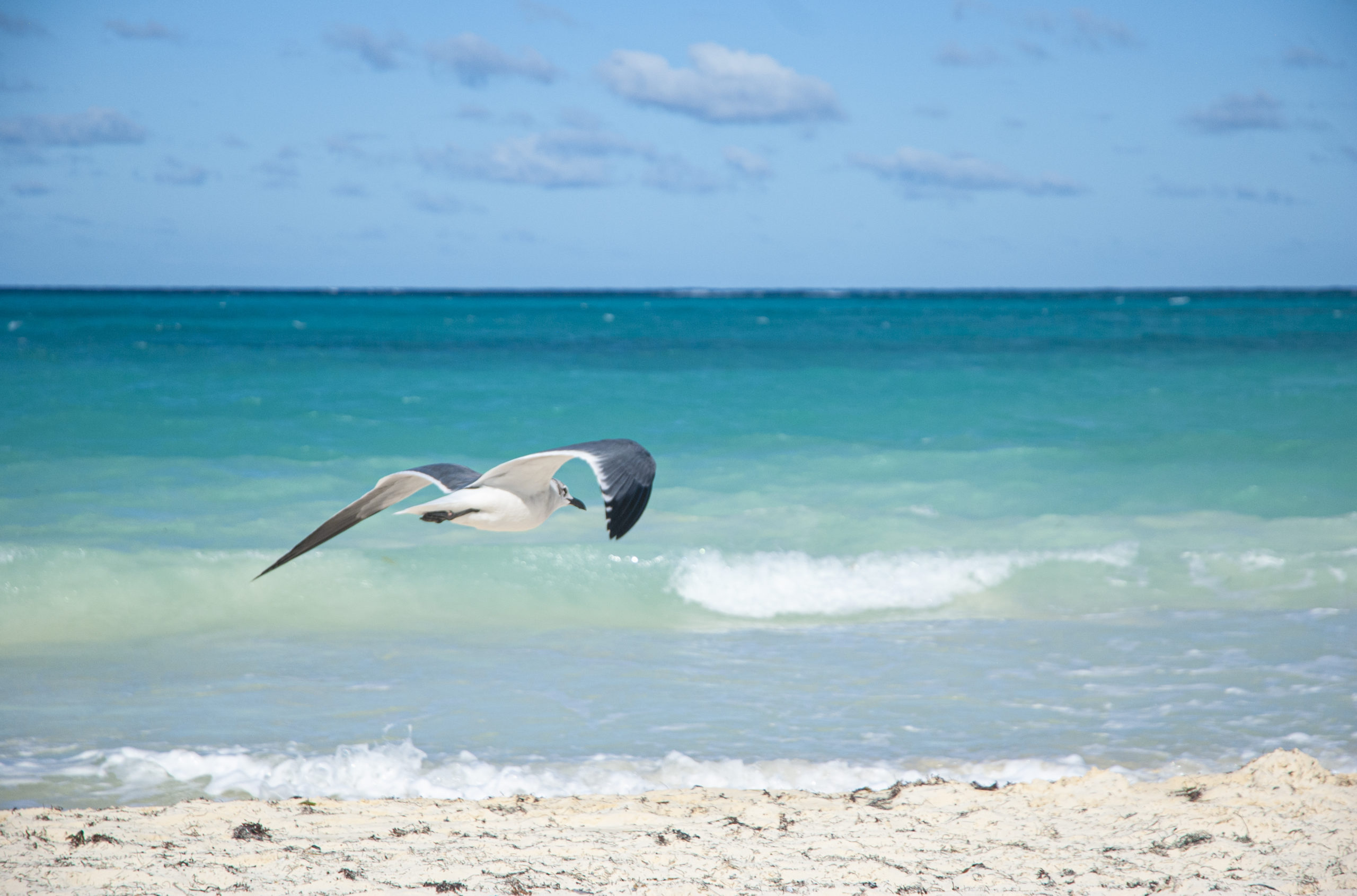
Another common fowl along the Gulf’s plush sandy shoreline is the laughing gull. If you’ve ever visited this coast, chances are you have seen one or 1,000 of these white avians with gray wings, charcoal-black heads, and distinctive red bills skittering along the waterline. Of nine gull species found in Florida, laughing gulls are the only ones that breed in the state.
If you’ve seen a laughing gull, you surely have heard one. Their name says it all as they call out in shrill stuttering squawks, as easily recognizable as laughs, and evoking well-known sounds of summers on the beach.
Laughing gulls’ silhouettes are similar to other gulls’, with plumage setting them apart. They nest in large colonies among beach grasses, and forage for food while walking, wading, or swimming. Like pelicans, they sometimes plunge into the surf for fish. They even will land on pelicans’ heads and snatch fish from their bill pouches. And they often gather and squawk for scraps tossed by beach goers.
Discover the Majestic Great Blue Heron – A Common Coastal Wading Bird With Unique Features and Behaviors
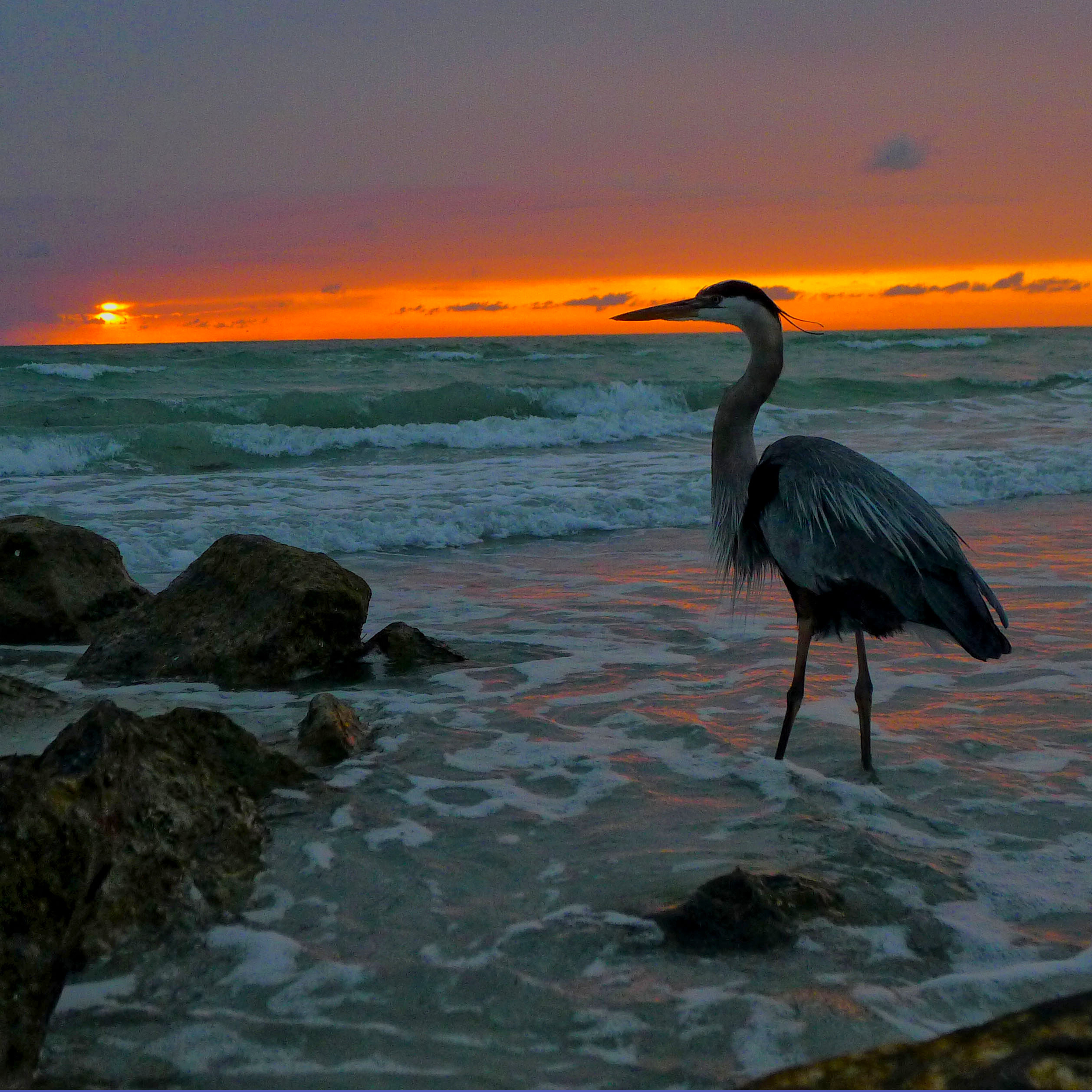
Great blue herons are yet another common wading bird beach goers are likely to encounter. Highly distinctive, these long-legged, long-necked, lean-looking fowl stand as tall as four feet, with a six-foot wingspan, and a dagger-like beak. They’re typically dark gray with a white neck, yellowish stalk-like legs, and a black stripe above either eye.
These herons are easy to recognize flying down the coast because their neck stays folded backwards, unlike similar-looking cranes, storks, ibises, and cormorants, which fly with necks extended forward.
On the ground, they often wade alone in shallows hunting for fish and other aquatic wildlife. They build nests measuring as much as a yard across in tree tops near water. Their calls sound like a guttural “whack” “whack” “whack”.
When it comes to migratory birds, the time-windows during which birders can catch views is more narrow, but the number of birds is plentiful.
Exploring the Gulf Coast’s Role in the Majestic Migration of Hundreds of Bird Species
The Alabama and Florida Gulf Coasts are in the Mississippi Flyway, one of North America’s major bird-migration corridors. More than 325 species—including geese, ducks, sparrows, warblers, thrushes, hummingbirds, cardinals, blue jays, a wide variety of shorebirds, and more—annually travel from breeding grounds in the northern United States and Canada to winter along the Gulf of Mexico as well as Central and South America. Then they return north in the spring.
While beachgoers relax under the sun or sculpt sandcastles, they may find themselves surrounded by countless birds that have just arrived from, or are heading to, distant destinations after incredible journeys spanning thousands of miles.
So, the next time you’re soaking in the beauty of our stunning beaches, take a moment to look around—and up! You might be surprised by the incredible array of feathered friends that share this coastal paradise with you.
Comments are closed.